Recently, on 23rd January 2026, at the recent 3rd Inland Waterways Development Council (IWDC 3.0) meeting in Kochi, the Government approved over ₹1,500 crore worth of projects aimed at enhancing cargo movement, boosting tourism, and further greening the inland waterways ecosystem.
From neglect to growth: Inland waterways since 2014
A decade of consistent focus has led to spectacular growth in India’s inland waterways business:
In FY 2013–14, total cargo movement via inland waterways was a modest 18.10 million metric tonnes (MMT).
By FY 2024–25, cargo movement surged to a record 145.5 MMT — nearly 8× growth over 10 years, reflecting a CAGR of 20.86%.
This rise underscores a sustained push toward modal shift from road/rail to waterways, which reduces logistics costs and lowers emissions.
Alongside cargo growth, passenger movement has also climbed, reaching over 1.61 crore passengers in FY 2023–24, with some reports noting even sharper year-on-year increases in 2024–25.
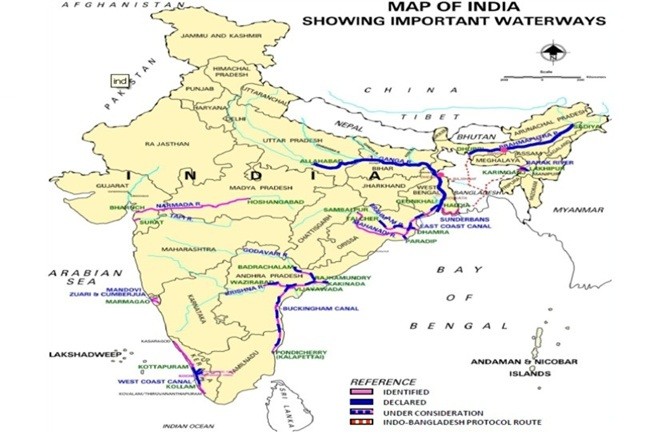
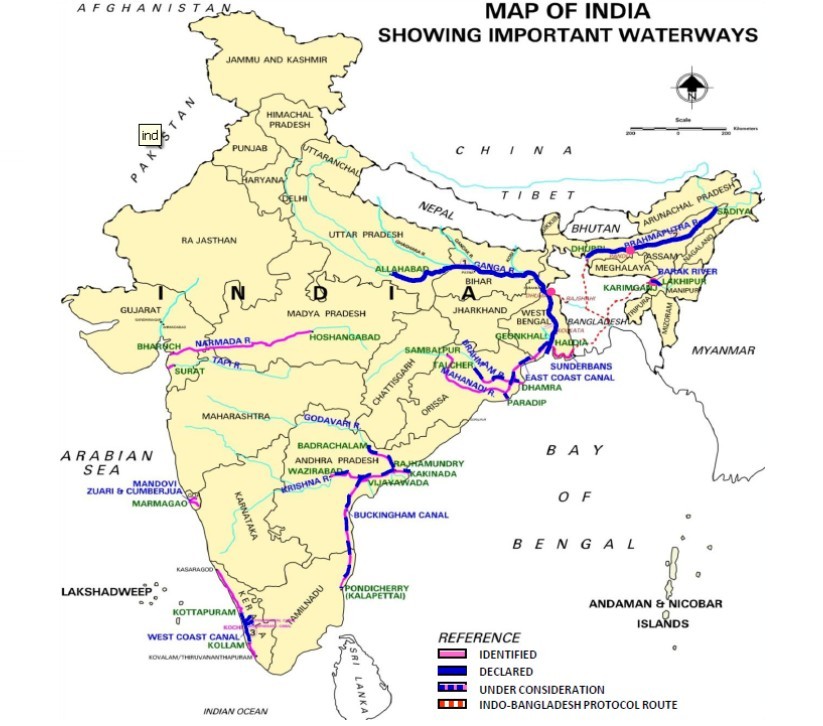
This performance is backed by new and revitalized National Waterways: from just 5 waterways in 2014, the number has grown to 111 designated waterways, and the operational navigable length nearly doubled from 2,716 km in 2014–15 to 4,894 km by 2023–24.
Policy push: Jalvahak & other reforms for cargo & connectivity
The Government has introduced targeted policy reforms to accelerate this growth — most notably the Jalvahak Cargo Promotion Scheme, launched in December 2024 - The scheme has an outlay of ₹95.42 crore and offers up to 35 % reimbursement of actual operating costs to cargo owners choosing inland waterways over roads or rail.
It incentivizes scheduled cargo services and helps demonstrate commercial viability on major routes such as Kolkata–Varanasi and Kolkata–Pandu, including via the Indo-Bangladesh Protocol route.
This policy is designed to shift nearly 800 million tonne - kilometres of freight from road/rail to waterways - nearly 17 % of the current cargo volume potential on waterways.
Additional reforms include:
Tonnage tax regime extension to inland vessels to reduce taxation and increase competitiveness.
Digital navigation & logistics tools like LADIS (Least Available Depth Information System), RIS (River Information System), Car-D, PANI, and MIRS to improve safety and efficiency.
Simplified No-Objection Certificate (NOC) processes for private investment in jetty and terminal construction.
Sustainable Logistics & Green Mobility
Inland waterways are inherently eco-friendly — they offer far lower emissions and fuel consumption per tonne-km compared to road and rail transport. The current government is strengthening this advantage by promoting green vessel technologies (e.g., hybrid electric and hydrogen-powered ferries) and integrating water transport into national logistics networks through schemes like PM Gati Shakti.
The IWDC 3.0 decisions further embed green mobility into inland waterways with clean-energy crafts and scheduled passenger services that are comfortable, efficient, and low-emission — making river transport appealing for both cargo movers and travelers.
Tourism & regional development
Waterways are also becoming tourism engines, connecting heritage sites, backwaters, and cultural destinations:
The IWDC 3.0 agenda approved multiple projects to develop cruise jetties and terminals to boost river tourism across states like Kerala, Gujarat, Odisha, and Karnataka.
These investments are expected to generate local employment, increase tourist footfall, and diversify the economic benefits of waterways beyond freight.
Strategic goals & vision
Under the Maritime Amrit Kaal Vision, India aims to increase the modal share of inland waterways from around 2 % toward 5 %, with targets of:
200 MMT cargo movement by 2030.
500 MMT by 2047 — drawing a long-term roadmap for sustainable and multimodal logistics.
The ongoing expansion of national waterways, coupled with incentive schemes and digital tools, is positioning river transport as a cornerstone of India’s logistics transformation and supply chain resilience.
Conclusion
India’s inland waterways have transitioned from under-utilised waterways to dynamic, sustainable transport corridors. With record-breaking cargo volumes, smart policy incentives like Jalvahak, digital infrastructure, and a clear long-term strategy, rivers are powering economic activity, reducing logistics costs, and creating a greener future.
As the network expands and private participation increases, India’s “blue highways” could soon carry not just cargo and passengers — but the aspirations of a nation moving toward efficient, inclusive, and environmentally responsible growth.
Popular Posts


Explore Topics

Comments