
A Logisticswall editorial | 7 November 2026
Adani Ports Plants Its Flag in Europe: How One Jetty in Gujarat Became a Global Logistics Contender
India's largest private port operator has agreed to buy Evos, Europe's second-largest independent liquid-storage company, for €2.56 billion. The deal shows Adani Ports no longer wants to be an Indian port company with a few foreign assets. It wants to be a global integrated transport platform.
The deal in one para
On 5 November 2026, Adani Ports and Special Economic Zone (APSEZ) announced it will acquire 100% of Netherlands-based Evos B.V. from Igneo Infrastructure Partners. It is an all-cash deal at an enterprise value of €2.56 billion (about US$2.88 billion). The equity value is €1.18 billion, and the price is 11.7 times Evos's 2025 EV/EBITDA. Financing is debt-led, with MUFG reported to have committed up to €2.8 billion. The deal still needs regulatory approvals and works council consultation, so it has not closed yet.
What exactly is Adani buying?
Evos is a quiet giant of Europe's energy infrastructure. It stores petroleum products, chemicals and other liquids in large tanks beside deep-water berths. It rents that capacity to traders, refiners and fuel suppliers.
Evos at a glance | Figure |
Terminals | 8 port-based terminals |
Countries | Netherlands, Germany, Spain, Belgium, Malta |
Storage capacity | 6.3 million cubic metres |
Tanks | 452 |
Vessel and barge berths | 63 |
Liquid cargo handled (2025) | 37 million tonnes |
Products | Gasoline, gasoil, marine fuels, jet fuel |
Position | Europe's 2nd-largest independent liquid-storage operator |
The terminals sit in key energy hubs: the Amsterdam-Rotterdam-Antwerp region, Hamburg and the Mediterranean. After closing, APSEZ will operate 28 ports and terminals across 10 countries. Until now its overseas portfolio covered Israel, Tanzania, Sri Lanka and Australia. Evos is its first foothold in Europe.
From one jetty to half a billion tonnes: how Adani Ports grew
1988: Adani Exports is formed as a commodity-trading business.
1994: The group takes over a single jetty at Mundra, Gujarat.
1998: Mundra welcomes its first ship and becomes India's first private port.
2001-2003: Rail connectivity arrives, India's first capesize vessel docks at Mundra, and Container Terminal 1 opens.
2015: APSEZ receives the award for the Vizhinjam port in Kerala and commissions a bulk terminal at Tuna Tekra, Kandla.
2023: The Haifa port in Israel is acquired, its first major step beyond South Asia.
FY25: Mundra becomes the first Indian port to cross 200 MMT in a year. Vizhinjam and the Colombo West International Terminal start operations. The 50 MTPA North Queensland Export Terminal (NQXT) in Australia is acquired.
FY26: APSEZ becomes the first Indian integrated transport operator to handle more than 500 MMT of port cargo in a year.
The numbers behind the climb
Metric | FY25 | FY26 | Change |
Port cargo | 450.2 MMT | 500.8 MMT | +11% |
Revenue | ₹31,079 cr | ₹38,736 cr | +25% |
EBITDA | ₹19,025 cr | ₹22,851 cr | +20% |
Net profit | ₹11,061 cr | ₹12,782 cr | +16% |
International ports revenue | ₹3,380 cr | ₹4,539 cr | +34% |
Marine revenue | ₹1,144 cr | ₹2,681 cr | +134% |
APSEZ also holds a 27.1% share of all-India port cargo and a 45.5% share of container traffic. Its domestic capacity is 653 MMT, its marine fleet has a record 136 vessels, and net debt to EBITDA stands at 1.9x against a policy ceiling of 2.5x. For FY27 it has guided to revenue of ₹43,000-45,000 crore and EBITDA of ₹25,000-26,000 crore. The long-term target is one billion tonnes of cargo by 2030.
Why Europe, and why liquids?
1. Predictable cash flows. Storage works like rent. Customers book tank space on contracts, so earnings are steadier than in volume-driven cargo handling. APSEZ itself says the deal adds predictable cash flows.
2. A more diversified cargo mix. Indian ports lean heavily on containers and dry bulk. Liquids follow a different demand cycle, which cushions the group when other segments swing.
3. A place in the energy transition. Evos's tanks serve conventional fuels today. APSEZ points to exposure to sustainable aviation fuel (SAF), biofuels and alternative marine fuels as European demand grows.
4. A connected global network. A group that already moves cargo through Mundra, Colombo, Vizhinjam, Haifa and Queensland can now link to Rotterdam, Hamburg and the Mediterranean. In logistics, network density is a moat.
5. The billion-tonne ambition. Karan Adani, APSEZ's Managing Director, said the acquisition strengthens the company's international presence and supports its goal of handling one billion tonnes.
How Europe makes Adani stronger
Better earnings quality: more contracted, infrastructure-style income to balance cyclical cargo.
Wider geography: international ports revenue already grew 34% in FY26, and Europe broadens that base.
New customers: access to oil majors, traders and fuel suppliers who use European hubs.
Operating know-how: experience running terminals under some of the world's strictest energy and safety rules.
Room to grow: a platform for further European acquisitions.
SWOT analysis
Strengths
Scale and track record: 500.8 MMT of cargo in FY26 and a leading domestic position.
Balance-sheet discipline so far: 1.9x net debt/EBITDA against a 2.5x ceiling.
Quality assets in Evos: 6.3 million cbm, 452 tanks and 63 berths in prime hubs.
Weaknesses
The purchase is debt-funded, with financing commitments of up to €2.8 billion.
The premium price of 11.7x EV/EBITDA leaves little room for error.
Liquid storage is a new vertical, and Europe is a new operating environment.
APSEZ missed its FY26 cargo guidance (500.8 MMT against 505-515 MMT).
The wider Adani Group has faced governance scrutiny and past short-seller allegations, which it has denied. European regulators and investors will watch closely.
Opportunities
Rising European demand for SAF, biofuels and alternative marine fuels.
Strategic positions in the Amsterdam-Rotterdam-Antwerp region, Hamburg and the Mediterranean.
Cross-selling between Evos's customers and APSEZ's global network.
A meaningful step toward the 1 billion tonne goal.
Threats
Regulatory approvals and works council consultation could delay or reshape the deal.
The energy transition could cut demand for conventional fuel storage, and converting tanks takes investment.
Higher leverage amid interest-rate swings, tariff uncertainty and geopolitical disruption.
Competition from larger, long-established storage players.
What to watch next
Closing timeline: the pace of approvals and works council feedback.
Debt paydown: whether APSEZ stays within its 2.5x leverage policy.
Fuel-transition plan: how much Evos capacity shifts to SAF and biofuels.
Integration: whether Evos keeps its brand and independence.
Next moves: more European or Mediterranean terminals.
The editorial verdict
Three decades ago, a single jetty in Gujarat was a bold bet on private ports in India. Today the same company handles half a billion tonnes a year and is buying into the heart of Europe's energy logistics. The strategy is clear: scale, diversification, and a seat among the fuels of the future.
The risks are just as clear: a large debt-funded deal at a full valuation, a regulatory gauntlet, and an energy transition that rewards only the adaptable. If Adani Ports executes well, Evos could be remembered as the deal that turned an Indian champion into a truly global logistics player. If it stumbles, it will be a lesson in the price of ambition.
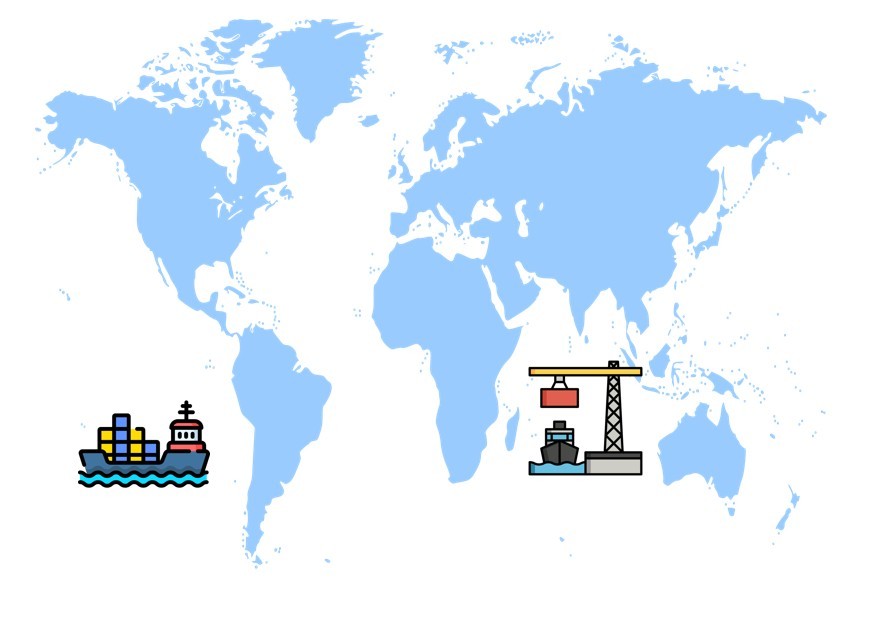
Either way, Europe has a new landlord in its tank farms, and the global logistics map has just been redrawn.
Sources: APSEZ FY26 results release (adaniports.com); DataPortuaria coverage of the Evos announcement (5-7 November 2026); IBEF.
Popular Posts


Explore Topics



Comments