
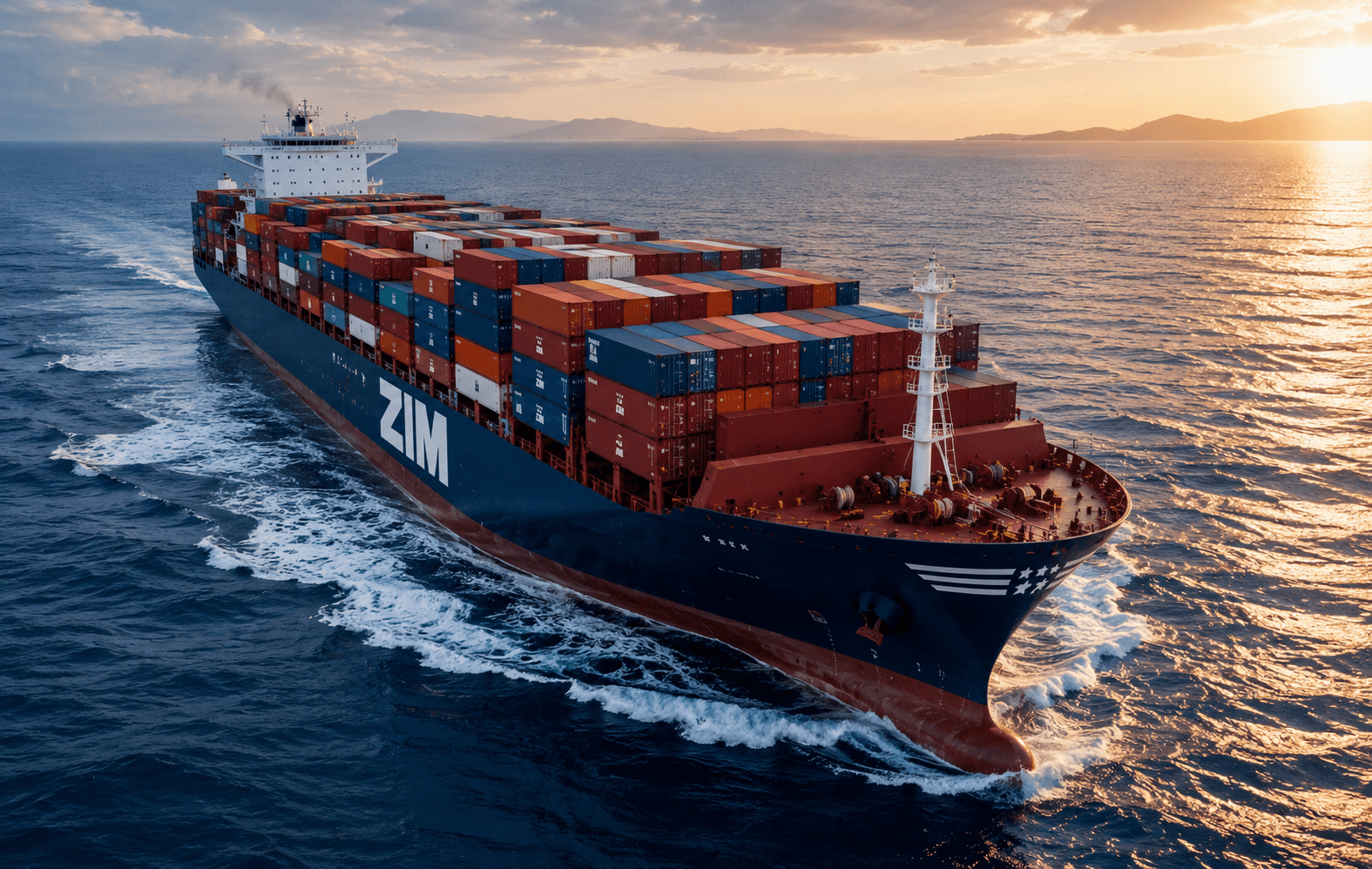
Shipping has always been an industry of contradictions. Companies can report record profits one year and losses the next. Ships can be worth millions more or millions less within months.
And sometimes a company can receive acquisition offers at a substantial premium while investors continue questioning whether the deal will actually close. That is precisely the situation surrounding ZIM Integrated Shipping Services.
At first glance, the numbers appear straightforward.
In February 2026, Hapag-Lloyd agreed to acquire ZIM in an all-cash transaction valued at approximately $4.2 billion, offering $35 per share to shareholders. The bid represented a 58% premium to ZIM's market price before the announcement and a 126% premium to the stock's unaffected trading level before takeover speculation emerged.
For most companies, such an offer would end the discussion. Yet months later, investors continue debating the company's value, the likelihood of deal completion and whether the market is properly pricing ZIM.
Why?
Because shipping mergers are rarely simple.
A company that transformed itself
The ZIM of 2026 is very different from the ZIM many industry veterans remember.
Under CEO Eli Glickman, the carrier moved from negative equity to become one of the most profitable container lines during the post-pandemic shipping boom.
Since its 2021 IPO, the company distributed approximately $5.7 billion in dividends and returned extraordinary value to shareholders. Management has argued that total capital returned could approach $10 billion once the Hapag-Lloyd transaction is completed.
The company also modernised its fleet aggressively.
Unlike traditional carriers that rely heavily on owned tonnage, ZIM adopted an asset-light strategy based on chartered vessels. It became one of the earliest major adopters of LNG-powered container ships, with LNG vessels representing a significant portion of its operating capacity.
In many ways, ZIM became a case study in how a smaller carrier could compete with industry giants.
Then the cycle turned
The challenge is that shipping remains cyclical.
The extraordinary freight rates seen during the pandemic era could not last forever.
In Q1 2026, ZIM reported revenue of approximately $1.4 billion, down from $2.01 billion a year earlier. The company moved from a profit to a net loss of $86 million as freight rates and carried volumes declined. Average freight rates per TEU also fell sharply year-on-year.
Those results reminded investors of a fundamental reality:
Shipping companies are often valued not on current earnings but on expectations of future cycles.
And future cycles are notoriously difficult to predict.
Why the market is still nervous
One of the most interesting developments is that many investors have not treated the takeover price as guaranteed.
Market discussions show that traders continue pricing in regulatory risk, approval risk and execution risk despite the signed agreement. The gap between market trading levels and the acquisition price reflects concerns about Israeli government approvals, competition reviews and the unique "golden share" structure associated with ZIM.
In simple terms:
The deal may be signed.
But shipping professionals know that signed deals and completed deals are not always the same thing.
What Hapag-Lloyd really wants
The acquisition is not simply about buying vessels.
It is about buying market position.
The combination would create a carrier group with more than 3 million TEU of capacity and strengthen Hapag-Lloyd's position across the Transpacific, Atlantic, Mediterranean and intra-Asia trades.
For Hapag-Lloyd, the acquisition offers immediate scale.
For ZIM shareholders, it offers a cash exit at a substantial premium.
For competitors, it represents another example of consolidation among the world's largest container carriers.
The bigger lesson for shipping
The ZIM story highlights a broader trend emerging across container shipping.
Scale is becoming increasingly important.
The world's largest carriers continue ordering vessels, investing in terminals, expanding logistics networks and pursuing acquisitions.
Smaller players face growing pressure to find a sustainable competitive advantage. Some choose specialisation. Some choose partnerships. Some become acquisition targets.
ZIM appears to have chosen the third path.
— Editorial Desk, LogisticsWall
Popular Posts

Explore Topics



Comments