

Being landlocked is often seen as a trade disadvantage. Yet Nepal has built one of South Asia's most unique international logistics networks, reaching global markets through treaty-backed access to Indian ports, rail corridors and border customs stations.
With merchandise exports valued at around US$1.6 billion and imports exceeding US$15 billion, Nepal remains one of South Asia's most import-dependent economies. India is by far Nepal's largest trading partner, while almost all overseas cargo moves through Indian maritime gateways before entering Nepal by rail or road.
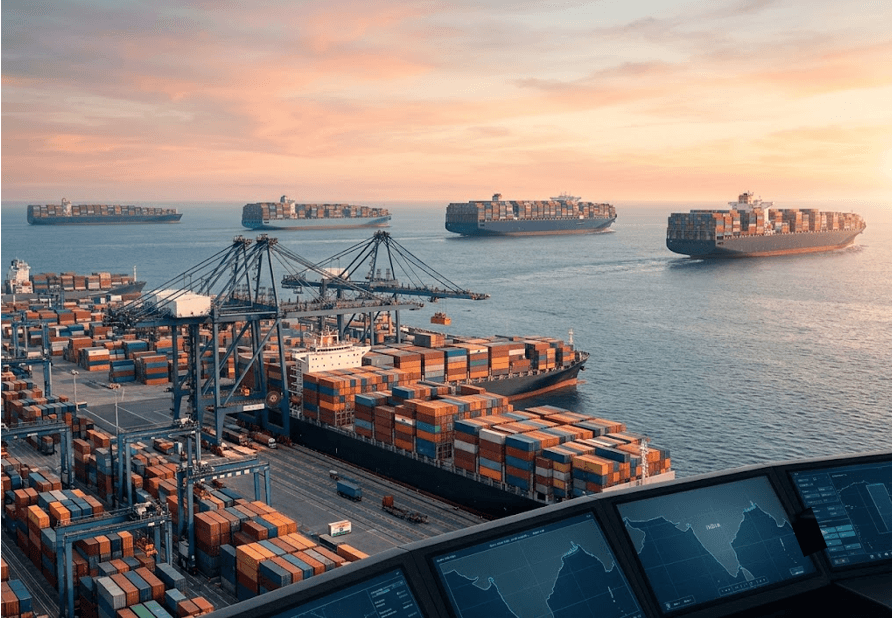
Three Indian ports keep Nepal connected to global markets
Unlike coastal nations, Nepal relies on transit rights under the India–Nepal Treaty of Transit to access international shipping routes. More than 98% of Nepal's third-country (overseas) trade passes through three Indian ports:
Kolkata Port – Nepal's traditional gateway
Haldia Dock Complex – handling increasing container and bulk cargo
Visakhapatnam Port – offering deeper drafts, lower vessel waiting times and improved operational efficiency for long-distance trade
These ports handle imports ranging from petroleum products and machinery to industrial raw materials, while supporting exports of carpets, garments, tea, cardamom and handicrafts.
Border gateways are the real logistics backbone
Once cargo reaches India, it enters Nepal through an integrated network of land customs stations and Inland Container Depots (ICDs).
The major gateways include:
Birgunj–Raxaul (Nepal's busiest trade corridor and home to the Sirsiya ICD)
Biratnagar
Bhairahawa
Nepalgunj
Kakarbhitta
Among these, Birgunj handles the largest share of Nepal's containerised cargo and serves as the country's principal rail-linked dry port, connecting directly with Kolkata, Haldia and Visakhapatnam. This multimodal system significantly reduces dependence on long-haul trucking from ports.
Rail connectivity is gradually replacing road dependence
One of the biggest developments in recent years has been the expansion of rail-based freight connectivity.
In 2025, India and Nepal signed a Letter of Exchange expanding railway cargo movement through additional rail corridors, including Jogbani–Biratnagar, while also simplifying procedures for containerised cargo movement. The agreement strengthens multimodal logistics by allowing Nepal to utilise a wider railway network for overseas trade.
The shift towards rail is expected to reduce transit time, improve cargo reliability and lower logistics costs for Nepalese importers and exporters.
The biggest challenge isn't access—it's logistics efficiency
Although Nepal enjoys treaty-backed access to international markets, logistics remains expensive.
Major constraints include:
congestion at Birgunj and Sirsiya ICD
heavy reliance on road transport beyond rail terminals
port handling and container detention charges
customs documentation and border procedures
limited multimodal infrastructure
These bottlenecks increase transit costs and reduce supply chain reliability, affecting the competitiveness of Nepalese exports in global markets. Industry assessments indicate logistics costs remain considerably higher than those of many comparable landlocked economies.
Why it matters
Nepal's international trade demonstrates that geography does not have to be a barrier to global commerce. Through treaty-backed transit rights, rail infrastructure and strategically located dry ports, the country has created an efficient gateway to the sea despite having no coastline.
As India and Nepal continue expanding rail connectivity and multimodal transport under the renewed Transit Treaty framework, the next phase of growth will depend less on gaining market access and more on improving logistics efficiency, reducing border delays and modernising freight infrastructure.
For Nepal, faster cargo movement through Kolkata, Haldia, Visakhapatnam and Birgunj will ultimately determine how competitively its businesses can participate in global trade.
Popular Posts

Explore Topics



Comments